All donations are welcome and go a long way in helping those in need…every little bit helps!
To donate to Jon Bon Jovi’s Birthday Wish on Causes, please click HERE

February 27 2012

All donations are welcome and go a long way in helping those in need…every little bit helps!
To donate to Jon Bon Jovi’s Birthday Wish on Causes, please click HERE
February 2 2012

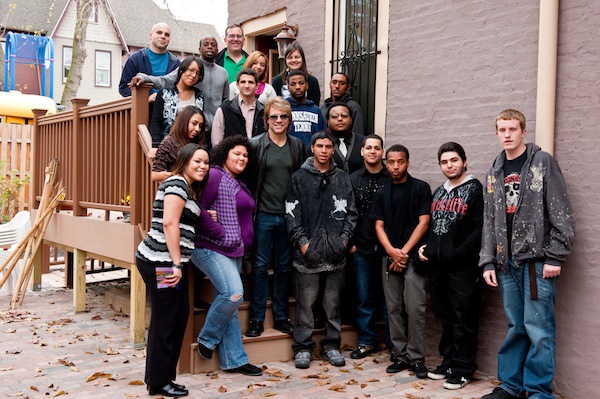
On Monday, November 15th Jon Bon Jovi visited two of the Soul Foundation’s community partners, the Hopeworks ‘N Camden C.R.I.B. in Camden, NJ and the Connelly House in Center City Philadelphia.
Jon’s first stop was in Camden, NJ where he visited with the students and staff of Hopeworks and the C.R.I.B. (Community Responding In Belief). The JBJSF provided funding for this project which opened its doors to its first resident in September 2010. The C.R.I.B. offers students a safe atmosphere with structured learning where youth can succeed. C.R.I.B. will house up to 10 youth, ages 18 and older, who must also be either enrolled in college courses or employed.
To view photos from Jon’s visit, please click HERE
For more information about Hopeworks ‘N Camden and the C.R.I.B. program please click HERE
Jon’s second stop of the day was to check on progress at the Connelly House in Center City Philadelphia. This project is currently under construction and is scheduled to begin accepting residents in Spring 2011. The JBJSF partnered with Project H.O.M.E. and Bethesda Project to help build a LEED-Certified apartment building that will serve as housing for formerly homeless men and women. The new 63,000-square-foot, eight-story high-rise consists of 79 single-resident units, as well as a multi-purpose room, computer lab, exercise facility, offices for Project H.O.M.E. and Bethesda Project, kitchens and additional social service amenities.
To view photos from Jon’s visit, please click HERE
For more information on the Connelly House, HERE
January 26 2012

Beginning at 9am, people who found themselves in need were invited to the Pilgrim Baptist Church to have access to clothing (adults & children), medical screening, employment services, and access to resource networks. After visiting the church, those participating were welcomed at JBJ Soul Kitchen which is located just around the corner. Soul Kitchen was open from 10am until 2pm, serving hot sandwiches, hot bowls of chili, and beverages to those in need as well as the volunteers.
In Monmouth county, Project Homeless Connect is done on the same day as the nationwide Housing Inventory and Point-In-Time Count of Homeless Persons that identifies unsheltered individuals. “Much advance planning went into this day and now that Soul Kitchen is in this community we felt we needed to be a part of this day’s events”, said Mimi Box, Executive Director of JBJSF.
Serving 126 meals to the community was an important role, but more important was the connection that JBJ Soul Kitchen and staff were able to make with those who came inside to share the warmth of good company and learn about Soul Kitchen. “Many were first time visitors and immediately, upon learning about our model, expressed an interest in providing volunteer services in the community in exchange for the ability to feed their families a healthy, nutritious meal”, said Heather Goldfarb, Marketing & Events Manager at the JBJSF.
Please see the story below from Asbury Park Press for more information on the Project Homeless Count for all of Monmouth County, NJ:
Monmouth homeless survey records greater numbers
Written by: Nina Rizzo | Asbury Park Press Staff Writer
Mild temperatures and the promise of free breakfast, clothing and medical checkups may have helped bump up the numbers for this year’s annual surveys to count the Shore area’s homeless and potentially homeless population.
Jeffrey Schwartz, who oversees Project Homeless Count for the Monmouth County Department of Human Services, said 527 people were counted at four sites, up from 291 last year counted at three snow-covered sites. The numbers include counts taken by volunteers who traveled to potential homeless hangouts throughout the county.
“This is an excellent count,” Schwartz said, adding this was the highest tally in recent years. “We know there are more folks out there, but this represents a very strong acknowledgment that there are people in need.”
The survey results — along with the number of people staying this week at shelters run by emergency and transitional housing agencies — are forwarded to the U.S. Department of Housing and Urban Development to get a snapshot of homelessness in America. Federal funding for housing programs in the county is tied to these survey results.
Monmouth received more than $2.5 million in renewals for supportive housing programs last year, up $400,00 from 2010, the county’s biggest boost of federal funds yet, Schwartz said.
Every dollar is needed. The county starts each day with 500 homeless clients who are staying in shelters, motels, boarding houses and other emergency housing. But this survey is to find the folks who have escaped the social safety net — the ones sleeping on a park bench or in tent cities or at a friend’s house.
Some men who came to New Beginnings Agape Christian Center in Freehold, one of the survey sites, were just looking for the give-aways, but their attendance gave social services providers a chance to talk about their programs.
Felix Aguilar, 20, of Freehold has been living with an uncle since he came from Puebla, Mexico, four years ago. He works as a bus boy at a local restaurant that doesn’t offer health insurance. He came for a flu shot and medical testing, he said through an interpretor.
Silvano Bruno, 38, of Freehold is an out-of-work landscaper who came for a new coat and to learn if he qualifies for emergency shelter. He has been sleeping on a friend’s sofa and won’t be trimming hedges again until spring.
Willie Jamison, a 37-year-old recovering addict living at a local men’s shelter and wants to take advantage of programs that can help him put his life back together.
An Asbury Park native who only reached the 10th grade, he abruptly quit his job at a rehabilitation center in Atlantic County in June 2009 after a dispute with his child’s mother. He has yet to find employment closer to home and has lived most of that time in a relative’s garage without her knowledge.
“This is beautiful,” he said, sitting with a garbage bag full of winter clothes between his legs. “I didn’t know there was that much help out there.”
Jamison’s goal is to get a G.E.D. and become a long-distance truck driver.
Monmouth County worked with at least 70 nonprofit groups, government agencies and private companies to offer social services, medical screenings, legal advice, used clothing, blankets, tioletries and food.
Charles D. Brown III, director of the county’s Department of Human Services, said many homeless people prefer to remain reclusive but he hoped the free items and special services would entice them to come in and be counted.
John Kirch, 62, has been homeless for more than a year. He participated in the survey at St. Mark’s Soup Kitchen in Keansburg, where he is a regular.
“I think (the county) is trying to get as much information as they can to help as many people as they can with the little money that they have,” Kirch said.
Monmouth County Freeholder John Curley, human services liaison, said he came to New Beginnings to talk to the residents about their situations.
He said he was pleased so many nonprofit groups and private companies sent volunteers to help administer the count.
“So many people are falling through the cracks. Our responsibility is that we lift them,” Curley said.
Curley said the county just hired 21 new intake workers to assist residents who apply for welfare, food stamps and other social services.
The food stamp office alone has a three-month backlog, and many of those new hires will be sent to that office when they complete training in April, he said.
Owen Redmond, program director of community development for Monmouth County, said Wednesday marked the first time the annual survey was conducted in Keansburg.
The site was added because of the large number of local nonprofits that work with the homeless there, Redmond said.
Swartz said of the 527 people who filled out the Point In Time survey, 25 went to the Keansburg site.
Some 165 were counted in Red Bank, 149 in Asbury Park, 145 in Freehold and 43 by the mobile volunteers.
January 18 2012
The Homelessness Prevention and Rapid Re-Housing Program (HPRP, funded through the American Recovery and Reinvestment Act of 2009) was a $1.5 billion federal effort to prevent a recession-related increase in homelessness. It was built upon ground-breaking work at the federal level and in jurisdictions across the nation to improve the homelessness system by adopting evidence-based, cost effective interventions. In 2010, its first year of operation, it assisted nearly 700,000 at-risk and homeless people. This report provides evidence that it was successful in achieving its goal of preventing a significant increase in homelessness.
Despite the fact that the number of homeless people was essentially unchanged between 2009 and 2011, there is much reason for concern. As this report points out, economic and demographic indicators linked to homelessness continue to be troubling. Homelessness is a lagging indicator, and the effects of the poor economy on the problem are escalating and are expected to continue to do so over the next few years. The resources provided by HPRP have run out in many communities and the program will sunset entirely in the fall of 2012; despite the need and proven effectiveness these resources have not been replaced. Debt and deficit reduction at the federal level have begun to shrink assistance available to the most vulnerable. In the year since the data in this report was collected (January 2011), there have already been reports that the number of homeless people is increasing. So while holding the line on homelessness between 2009 and 2011 was a major accomplishment of federal investment and local innovation, the failure to sustain this early recipe for success threatens to undermine progress now and in the future.
Report Contents
The National Alliance to End Homelessness has published a series of reports chronicling changes in the levels of homelessness in the nation and in individual states and jurisdictions in order to chart progress toward the goal of ending homelessness. The most recent of these, The State of Homelessness in America series, not only examines changes in national-, state-, and local-level homelessness data, but also provides data on related economic and demographic trends.
The State of Homelessness in America 2012, the second in a series from the National Alliance to End Homelessness, examines both homelessness and economic and demographic data, using the most recently available national data from the U.S. Departments of Housing and Urban Development, Health and Human Services, Justice, Labor, and Commerce; and from the private real estate research group RealtyTrac. It consists of three chapters. Chapter One presents data on homelessness at the national and state levels using point-in-time estimates of the overall homeless population and subpopulations. Chapter Two describes economic factors that impact homelessness including housing cost and unemployment. Chapter Three describes some demographic factors that impact homelessness, including population groups that are at increased risk. In addition, Appendix One provides data on homelessness in the largest metropolitan areas.
Major Findings
Homelessness
Using the most recently available national data on homelessness, the 2009 and 2011 point-in-time counts as reported by jurisdictions to the U.S. Department of Housing and Urban Development, the report chronicles the changes in overall homelessness and in homelessness among subpopulations between 2009 and 2011. Point-in-time count methodologies vary and are imperfect and as such the aggregated numbers do not represent a precise count of homeless people. The counts, however, when compared over time, provide a way to assess whether the homeless population has increased or decreased.
Economic Factors
Homelessness is basically caused by the inability of people to pay for housing; thus it is impacted by both income and the affordability of available housing. In recognition of this, this report examines certain economic indicators that affect people who are homeless or at risk of being so. These factors are examined for the years 2009 to 2010, the latest for which data is available from the U.S. Census Bureau’s American Community Survey Public Use Microdata Sample (PUMS) files, the U.S. Department of Labor, and RealtyTrac, a private real estate research group. Conditions worsened from 2009 to 2010 among three of the four economic factors examined: housing cost, unemployment, and foreclosure.
Demographic Factors
While homelessness affects people of all ages, races, ethnicities and geographies, there are groups of people at increased risk. This report examines four populations at increased risk of homelessness: people living in “doubled up” situations, people discharged from prison, young adults leaving foster care, and people without health insurance. Using data from the U.S. Census Bureau’s American Community Survey Public Use Microdata Sample (PUMS) files, the U.S. Department of Justice, and the U.S. Department of Health and Human Services, this report chronicles changes in some of the demographic drivers of homelessness between 2009 and 2010.
Moving Forward
The State of Homelessness 2012 lays out a roadmap for ending homelessness. Prevention and rapid re-housing clearly work: this is the lesson of the Homelessness Prevention and Rapid Re-Housing Program which appears to have forestalled an increase in homelessness despite the poor economy, high unemployment, and lack of affordable housing. With 40 percent of homeless people unsheltered, the crisis response system must be improved. Permanent supportive housing works to house chronically homeless people and veterans with disabilities, and continued investment will solve these problems. Generally, low incomes and high housing costs, combined with a lack of supportive services for those who need them, make many people vulnerable to homelessness. Ultimately, as the nation moves to address the debt and deficit crises, it will be essential to ensure that the needs of the most vulnerable are prioritized in order to avoid increased homelessness, suffering, and cost.
This is an excerpt from the report. To read the entire report, please click HERE
January 11 2012

In 2012, I look forward to the Soul Kitchen helping those who in these difficult financial times need help from their neighbors. Remember, a helping hand up is not a hand out. Empowering your neighbor is not entitling them. You’d be surprised how many people today are either in need or on the verge of economic assistance. WE have the power to make a difference. Find something or someone that moves you… you can make a difference and I promise it will make you and that neighbor in need feel something magical. Don’t fall into the negative. Don’t assume the press or those in the media know better or know more. Follow YOU. Partisanship, is just ignorance in disguise.
OK, enough of my thoughts. It’s time to go to work.
See you round… JBJ